When the National Building Code of Canada (NBCC 2015) governs structural design, a thorough soil mechanics study becomes the foundation of every successful project in Oakville. The town sits on the South Slope of the Niagara Escarpment, where the underlying Queenston Shale meets complex glacial deposits from the last retreat of the Lake Ontario lobe. In our experience, the interaction between weathered shale bedrock and overlying Halton Till creates bearing conditions that shift dramatically across a single lot. We have investigated sites near Sixteen Mile Creek where competent rock was found at 1.8 metres, while properties just 200 metres east required deeper investigation due to soft lacustrine clays. Because Oakville enforces strict sediment control and slope setback requirements under Conservation Halton guidelines, integrating a slope stability analysis early in the design phase prevents costly permit delays. Our laboratory completes particle-size distribution, Atterberg limits, and consolidated-undrained triaxial tests following ASTM D4318 and D4767 protocols, delivering parameter sets that reflect the actual stratigraphy encountered beneath the site, not generic textbook values.
Oakville’s Halton Till isn't uniform — it transitions from stiff to soft within a short horizontal distance, and ignoring that variability during foundation design is the most frequent cause of differential settlement we encounter.
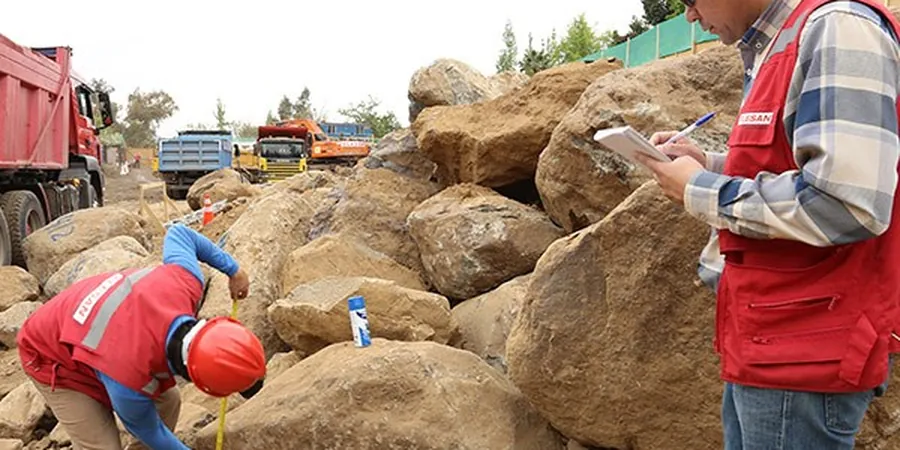
Methodology and scope
Local considerations
Oakville’s development pattern — from its origins as a shipbuilding and harbour village at the mouth of Sixteen Mile Creek in the 1820s, through the post-war subdivision boom that pushed housing northward onto farmland, to today’s infill projects in established neighbourhoods like Bronte and Kerr Village — means our projects encounter a wide range of disturbed and natural ground conditions. The most persistent risk we document involves uncontrolled fill placed during mid-century grading operations: mixtures of shale fragments, clay, and construction debris that were never engineered for structural support. On one recent commercial project near Trafalgar Road, we encountered 3.4 metres of such fill over soft alluvium, requiring over-excavation and replacement with compacted granular material before spread footings could be used. Another recurring issue is the presence of artesian conditions in the lower fractured shale, which can create uplift pressures that would destabilize a basement slab if not relieved through properly designed drainage layers. Sulfate attack on buried concrete is also a genuine concern here — weathered shale can release sulfates that degrade standard Portland cement, necessitating Type HS or HSb cement per CSA A3001, and we quantify that exposure through chemical analysis of groundwater and soil paste extracts during every soil mechanics study.
Applicable standards
NBCC 2015 — National Building Code of Canada (structural design provisions), ASTM D1586-18 — Standard Test Method for Standard Penetration Test, ASTM D4767-11(2020) — Consolidated Undrained Triaxial Compression Test, CSA A23.3-19 — Design of Concrete Structures, Ontario Building Code (O. Reg. 332/12) — geotechnical submission requirements, ASTM D2488-17 — Visual-Manual Description of Soils
Associated technical services
Borehole Drilling and In-Situ Testing
Hollow-stem auger drilling with SPT sampling at regular depth intervals, plus NQ2 diamond coring into Queenston Shale to assess bedrock quality and recovery.
Laboratory Strength and Consolidation Testing
Triaxial compression (CU), oedometer consolidation, and unconfined compression on shale cores to determine bearing capacity and settlement parameters.
Groundwater and Chemical Assessment
Monitoring well installation, permeability testing, and sulfate/pH analysis to support dewatering design and concrete durability specifications.
Foundation Engineering Report
A sealed report containing bearing resistance tables, settlement estimates, lateral earth pressure coefficients, and construction recommendations for footings, piles, or mat foundations.
Typical parameters
Frequently asked questions
How much does a soil mechanics study cost for a project in Oakville?
For a typical residential or small commercial investigation in Oakville involving two to three boreholes with SPT sampling, Shelby tube recovery in clay layers, laboratory testing (triaxial, consolidation, gradation), and a sealed foundation report, the total cost ranges from CA$4,450 to CA$7,420. The final figure depends on borehole depth, whether bedrock coring is required, and the number of consolidation or chemical tests specified. We provide a fixed-price proposal after reviewing the site plan and any available Ontario Geological Survey mapping for your location.
What geotechnical challenges are specific to building near Lake Ontario in Oakville?
Properties south of Lakeshore Road and along the Bronte Creek corridor often have a shallow groundwater table that rises within a metre of grade during spring melt, plus layers of soft glaciolacustrine clay deposited when the ancestral Lake Iroquois stood at a higher elevation. These clays are normally consolidated or lightly overconsolidated and can undergo significant long-term settlement under fill or structural loads. We use oedometer tests on undisturbed Shelby tube samples to calculate the compression index and estimate settlement magnitude, and we recommend preloading or surcharge strategies where time permits.
How long does it take to receive the final soil report after drilling is completed?
Field drilling for a standard Oakville investigation typically takes one to two days. Laboratory testing — particularly consolidation tests that require incremental loading over 24 to 48 hours per specimen — adds approximately three to four weeks to the schedule. We submit the geotechnical report, stamped by a Professional Engineer licensed in Ontario, within four to five weeks of completing fieldwork. If preliminary bearing values are needed sooner for permit applications, we can issue an interim letter summarizing SPT N-values and tentative recommendations within five business days of drilling.