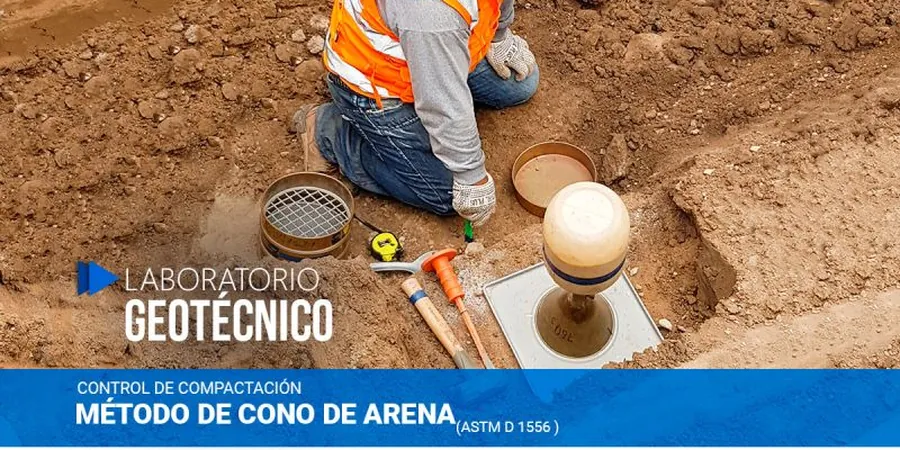
Over 225,000 people live in Oakville, and with the town pushing densification along corridors like Trafalgar Road and Dundas Street, the number of active building permits keeps climbing. Every project that moves earth—from a single-family home near Lake Ontario to a commercial slab north of the QEW—needs compaction verification. The sand cone test remains the most practical way to confirm that fill meets spec before concrete goes down. Our lab runs field density checks daily across Halton Region, following ASTM D1556 without shortcuts. We know the local fills, the red shale from the Queenston Formation, and the silty tills that show up in subdivisions around Sixteen Mile Creek. Before paving starts, many contractors also request a CBR test to tie density results to pavement design parameters.
A passing sand cone test is the last physical check before concrete covers the fill. After that, you own whatever is underneath.
Methodology and scope
Local considerations
South of Lakeshore Road, you get sandy soils and high groundwater—compaction is usually straightforward, but moisture control matters. North of Dundas Street, the glacial till is stiffer, full of silt and clay lenses that can hold water and pump under a smooth-drum roller. A density test that reads 95% in the south might be easy to achieve with a few passes, while the same spec in the north requires careful moisture conditioning and a padfoot roller. Skipping field density checks in Oakville's northern subdivisions leads to settlement under slabs and dips in asphalt within two winters. The freeze-thaw cycles here, with temperatures swinging from -15°C to +5°C in a single February week, punish poorly compacted base. We see it every spring on patios and driveways where the owner waived testing to save a day.
Applicable standards
ASTM D1556-15e1, AASHTO T-191, ASTM D698-12e2, ASTM D1557-12e1, ASTM D5030 (for oversized particles), OPSS.MUNI 206 (Ontario granular base)
Associated technical services
Sand Cone Density (ASTM D1556)
Standard method for fill, utility trenches, and structural backfill. We bring the calibrated sand, cone apparatus, and digital scale to your site. Results delivered within hours.
Proctor Correlation
Lab-based standard or modified Proctor per ASTM D698/D1557. We use the same material from your borrow source to establish the target dry density curve.
Nuclear Gauge Cross-Check
For large highway or runway projects, we pair sand cone tests with nuclear gauge readings to develop site-specific calibration curves per ASTM D6938.
Typical parameters
Frequently asked questions
How much does a sand cone field density test cost in Oakville?
A single sand cone test typically ranges from CA$120 to CA$200, depending on site location within Halton and whether moisture content is run on-site or at the lab. Volume discounts apply for projects needing 10 or more tests per visit.
How many tests do I need for a standard house foundation in Oakville?
One test per lift per 200 square metres is the typical spec, but for a single-family home pad we usually run at least three tests per lift—center and both edges. The Town of Oakville building department may request density records for engineered fill under footings.
Can you test gravel larger than 50 mm with the sand cone?
No. ASTM D1556 limits the method to soils with maximum particle size of 50 mm. For fills with cobbles or oversize gravel, we use the water replacement method per ASTM D5030 or perform a test fill with proof rolling observed by the geotechnical engineer.